
 Divinefavour Ndada
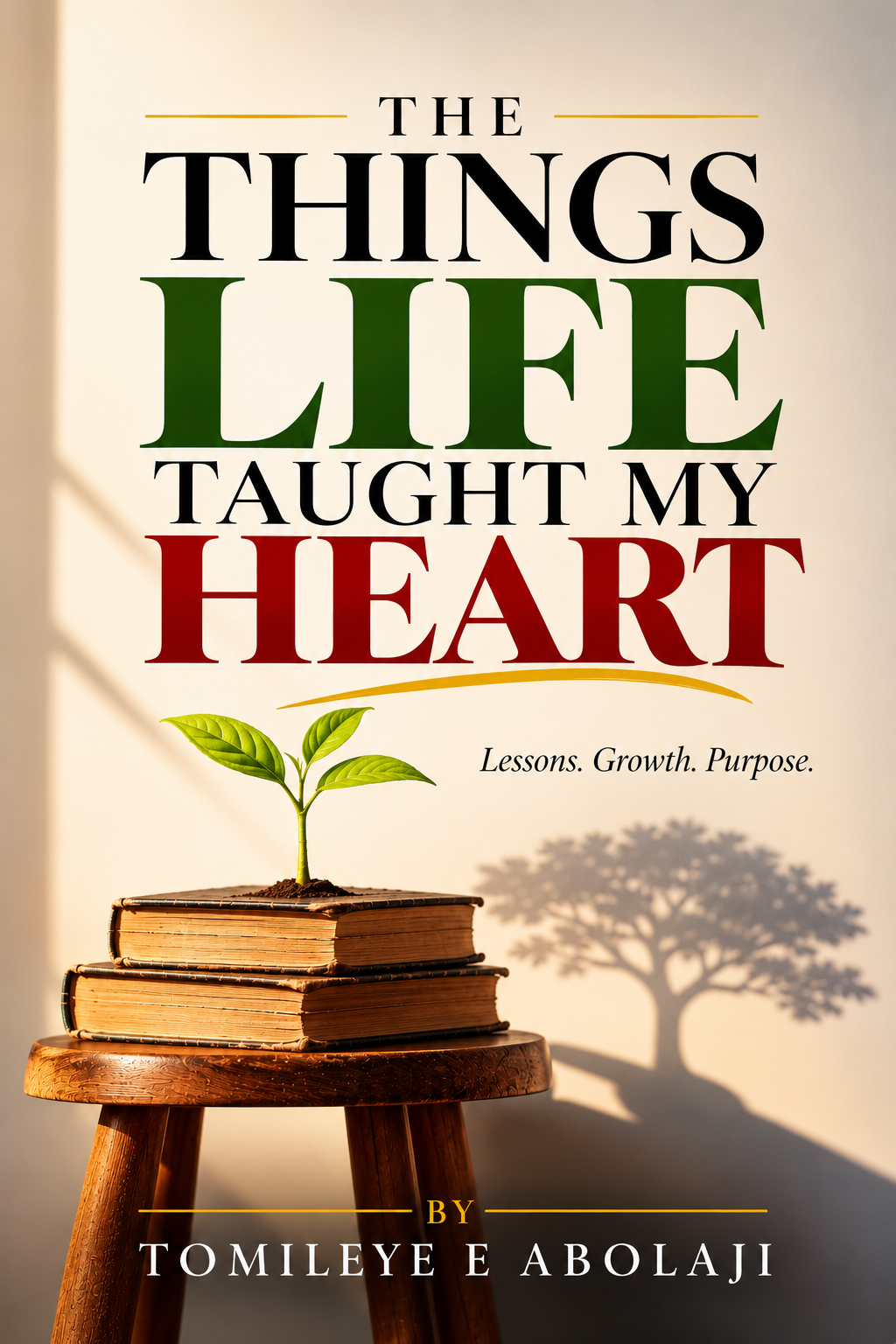
Life rarely unfolds according to the plans we make. It introduces us to unexpected beginnings, difficult endings, complicated relationships, and moments that challenge our understanding of ourselves and others. Yet, within these experiences lie opportunities for reflection, growth, and transformation. In The Things Life Taught My Heart, Tomileye E. Abolaji explores this familiar but profound reality through twenty reflective poems that examine the experiences, encounters, and lessons that shape the human journey.
A legal counsel, author, and performance poet, Abolaji brings together the precision of an analytical mind and the sensitivity of a creative voice. The collection is deeply personal, drawing from experiences of friendship, betrayal, love, uncertainty, professional development, courage, and self-discovery. However, its appeal extends beyond the author’s personal history. By presenting individual experiences through recognisable human emotions, she creates room for readers to encounter aspects of their own stories within her reflections.
One of the book’s most compelling qualities is its deliberate thematic organisation. The twenty poems are arranged into five emotional journeys: The Wounds We Carry, The Things Love Leaves Behind, The Value of Being Seen, Learning to Stand, and Becoming More. This arrangement gives the collection a discernible progression, moving from the discomfort of difficult experiences towards greater understanding, independence, hope, and self-belief. Rather than presenting unrelated reflections, Abolaji constructs a journey in which each experience contributes to a broader conversation about personal development.
The opening poems establish the emotional foundation of the collection. In “The Courage Hidden in a No,” the author examines the difficulty of setting boundaries, particularly when doing so threatens an established friendship. The poem challenges the assumption that kindness must always involve agreement or personal sacrifice. Its central insight, that generosity should not require the destruction of one’s peace, is both practical and relevant. Similarly, “The Day Friendship Changed the Locks” explores the painful discovery that familiarity does not necessarily guarantee loyalty. Together, these poems invite readers to reconsider the quality of their relationships and recognise that protecting one’s emotional well-being is not synonymous with selfishness.
The collection becomes particularly engaging when it explores the vulnerability of navigating unfamiliar circumstances. “The Blue Dot and the Lost Girl” and “When the Eggs Hit the Ground” transform seemingly ordinary incidents into reflections on frustration, uncertainty, and resilience. A misplaced bus stop, confusing directions, and a broken crate of eggs become symbols of the helplessness that can accompany unfamiliar beginnings. The author’s ability to extract meaning from everyday occurrences is noteworthy. She understands that significant emotional experiences do not always require extraordinary circumstances; sometimes, an ordinary inconvenience becomes overwhelming because it arrives at the end of an already demanding day.
Love and betrayal receive equally thoughtful attention. “Love in the Time of Loading” offers a refreshing account of how an ordinary online interaction during the lockdown gradually developed into a meaningful relationship. Its conclusion, in which the stranger becomes the author’s husband, gives the poem an intimate and affectionate quality. In contrast, “The Truth Had a Baby’s Face” examines the emotional consequences of dishonesty within a romantic relationship. The poem’s strength lies in its distinction between the existence of a difficult truth and the deliberate concealment of that truth. It is not simply the revelation of another person’s responsibility that causes pain; it is the betrayal of trust. This distinction gives the poem emotional credibility and makes its message particularly significant.
Another notable strength is the author’s treatment of courage. Throughout the collection, courage is presented not as an absence of fear but as the willingness to respond constructively to difficult circumstances. In “When the Road Grew Teeth,” a frightening encounter during a journey becomes an exploration of vulnerability and survival. “Leaving Is Also a Form of Courage” further develops this idea by challenging the belief that walking away from an invested relationship, situation, or opportunity automatically represents failure. These reflections offer a mature understanding of strength: sometimes it is expressed through endurance, and at other times through the wisdom to recognise when a new beginning is necessary.
The middle and later sections of the book also celebrate recognition, opportunity, independence, and the willingness to grow beyond familiar limitations. Poems such as “The Day Someone Saw Me,” “A Salary Called My Name,” and “The Woman I Had Not Yet Become” highlight the importance of preparation, responsibility, and self-belief. Particularly compelling is the suggestion that confidence does not always precede action; sometimes, it develops through the experience of attempting what initially appears unfamiliar. This is an important message for readers who hesitate to embrace opportunities because they feel insufficiently prepared.
Stylistically, Abolaji adopts an accessible, conversational approach to poetry. Her language is largely uncomplicated, allowing the experiences and reflections to remain at the centre of attention. She makes effective use of personification, imagery, contrast, and metaphor to give ordinary situations broader significance. The title “The Traffic That Ate the Day,” for instance, immediately communicates the frustration of lost time. The shorter poems towards the end of the collection also demonstrate a more concentrated lyrical expression, particularly in their treatment of perseverance, forgiveness, changing seasons, and everyday kindness.
While the collection’s reflective and explanatory style occasionally makes its lessons explicit, this accessibility also contributes to its appeal. Readers who enjoy poetry that combines personal storytelling with practical reflections will find the approach inviting.
Ultimately, The Things Life Taught My Heart is an invitation to examine life’s experiences with greater honesty and perspective. It reminds readers that disappointment need not define the future, that difficult endings do not invalidate previous investments, and that personal growth often begins with the courage to respond differently to familiar challenges. Tomileye E. Abolaji has offered a collection that is intimate in its origins, relatable in its themes, and encouraging in its outlook. Its most enduring message is that becoming is a continuous process, and every season, whether welcomed or resisted, can leave us with something worth understanding.
Gabriel Ebiere Blessing is a Nigerian writer and spoken-word artist whose work interrogates the complexities of human existence, faith, identity, and the delicate intersections between personal experience and collective realities. Her writing is characterized by emotional depth, contemplative inquiry, and a keen sensitivity to the unspoken narratives that shape human lives. Her work reflects a sustained interest in the transformative possibilities of words and their capacity to deepen human understanding.
0 نظرات